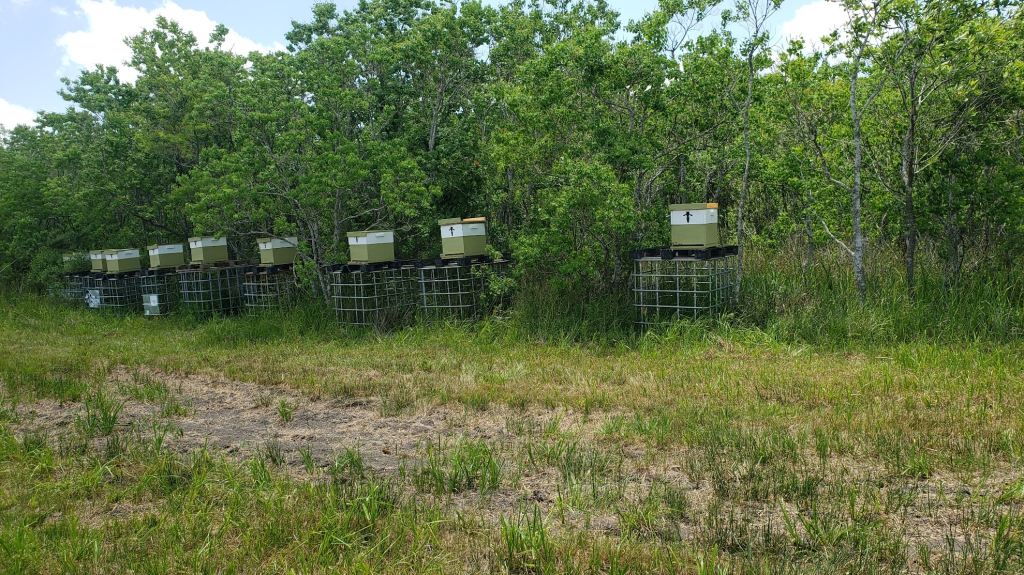
Keeping your hives elevated off the ground — like on those sturdy pallets with the wire cages around them — is one of the smartest moves in beekeeping, especially in a humid, buggy place like coastal Texas.
Here are the main reasons it matters so much:
Moisture control — Ground contact is the enemy of wooden equipment. In our humid climate (and especially after rains or in low-lying areas), direct ground placement lets moisture wick up into the bottom board, encouraging rot, mold, and fungal issues. Bees have to work overtime to control humidity inside the hive, and wet conditions can lead to problems like nosema. Raising the hives lets air circulate underneath, keeping everything drier and healthier — just like bees naturally choose elevated tree hollows over ground-level spots.
Pest protection — Elevation makes life much harder for the little villains:
- Ants (especially those aggressive red fire ants we deal with here) have a tougher time marching straight in. Many beekeepers add moat-style ant guards around the legs for extra insurance.
- Skunks, raccoons, and other critters that love to scratch at the entrance for a bee snack have to stand up awkwardly to reach — exposing their soft underbelly to defensive stings.
- Mice and small rodents find it harder to climb and sneak in during colder months.
- Even small hive beetles have a slightly harder time with their lifecycle when the hive isn’t sitting right on damp soil.
Better entrance clearance and airflow — Vegetation (like that tall grass and weeds in your photo) can’t grow up and block the entrance as easily. Bees can fly in and out freely without fighting through brush. Plus, the extra airflow underneath helps with ventilation — super important in our hot, sticky summers when bees are fanning hard to cool the hive.
Easier on your back — When you’re working 40 hives for propolis collection, bending over less to inspect, manipulate frames, or scrape propolis makes a huge difference over time. Those pallet setups put things at a much more back-friendly height.
In short, while bees can survive on the ground for a while, elevating them mimics their natural preferences, cuts down on maintenance headaches, protects colony health, and extends the life of your equipment. It’s basic good husbandry — especially when your main goal is consistent propolis production rather than maximizing honey. Your setup looks solid for that purpose!